Foundational
The Paper FingerPhone, a sustainably designed electronic Musical Instrument
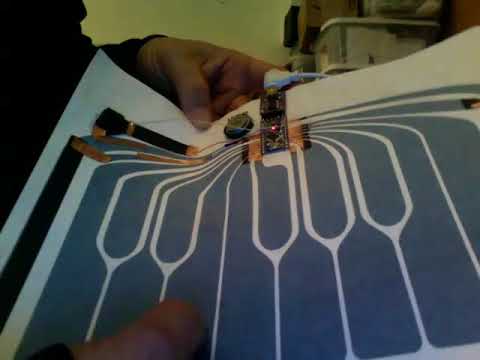
Fri, 01/26/2018 - 16:00 — AdrianFreedThe next version used a pizza box as the resonator to demonstrate reuse as the sustainability aspect was emphasized..
Eventually it was placed on cardboard to be attached to poster board where it won "Best Poster" award at the NIME conference.
The conference paper associated with that poster presentation was chosen for inclusion in the NIME reader.
Notations for Performative Electronics: the case of the CMOS Varactor
Mon, 03/08/2021 - 15:18 — AdrianFreed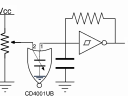
Summary
Demonstrating an unusual application of a CMOS NOR gate to implement a CMOS varactor controlled VCO, I explore the idea of circuit schematics as a music notation and how scholars and practitioners might create and analyze notations as part of the rich web of interactions that constitute current music practice.
Machine Learning and AI at CNMAT
Fri, 07/24/2020 - 15:27 — AdrianFreedAnalog and Digital Sound Synthesis as Relaxation Oscillators
Thu, 04/11/2019 - 17:40 — AdrianFreedThe following pages provide context for the workshop and include links to contributions from my co-teacher, Martin De Bie. This includes pointers to various iterations of his 555 timer-based Textilo project.
This project will be expanded ongoingly with further relaxation oscillator schemes.
Publications (Bibliography) Workflow 2018
Mon, 01/29/2018 - 15:04 — AdrianFreedPervasive Cameras: Making Sense of Many Angles using Radial Basis Function Interpolation and Salience Analysis
Mon, 01/15/2018 - 15:38 — AdrianFreedPervasive Cameras: Making Sense of Many Angles using Radial Basis Function Interpolation and Salients Analysis
Abstract. This paper describes situations which lend themselves to the use of numerous cameras and techniques for displaying many camera streams simultaneously. The focus here is on the role of the “director” in sorting out the onscreen content in an artistic and understandable manner.
The Paper FingerPhone: a case study of Musical Instrument Redesign for Sustainability
Mon, 01/15/2018 - 15:38 — AdrianFreedCommentary proposed for NIME Reader
The fingerphone is my creative response to three umbridges: the waste and unsustainability of musical instrument manufacturing practices, the prevailing absence of long historical research to underwrite claims of newness in NIME community projects, and the timbral poverty of the singular, strident sawtooth wavefrom of the Stylophone – the point of departure for the fingerphone instrument design.
David Wessel’s Slabs: a case study in Preventative Digital Musical Instrument Conservation
Mon, 01/15/2018 - 15:38 — AdrianFreedAudio Sine and Square Wave Signal Generator using a Wavetable
Wed, 02/24/2010 - 01:09 — AdrianFreed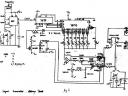
I discovered by accident that some folk from Greece published the same ideas in a professional technical journal in 1989 (attached). If you are a scholar of such things it is interesting to compare and contrast the modes of articulation in my vernacular engineering approach with those of the academic paper.