Fulltext Images:
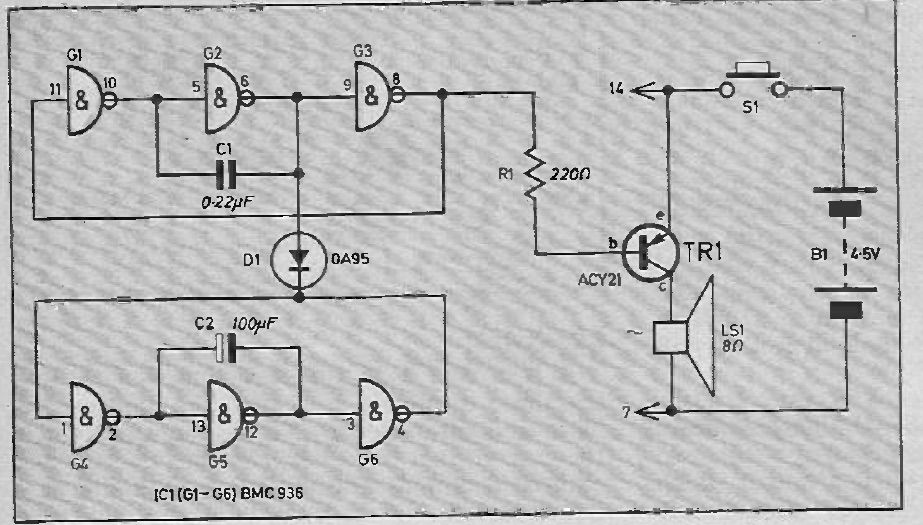
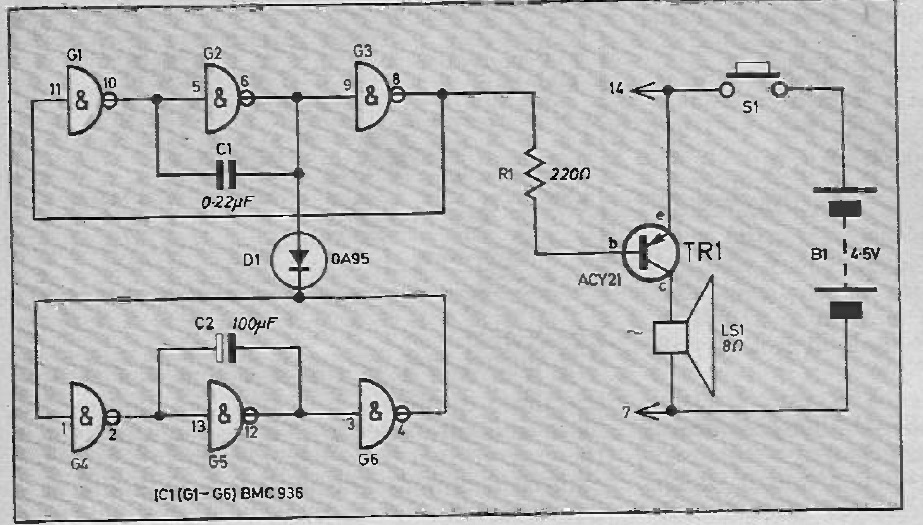
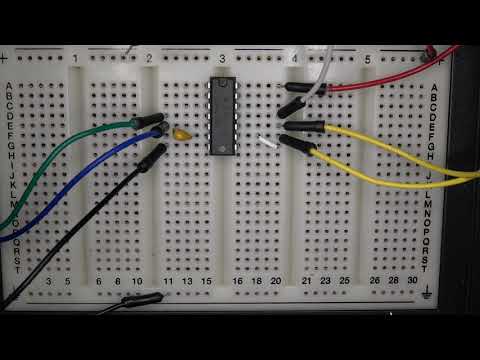
The following pages provide context for the workshop and include links to contributions from my co-teacher, Martin De Bie. This includes pointers to various iterations of his 555 timer-based Textilo project.
This project will be expanded ongoingly with further relaxation oscillator schemes.
The fingerphone is my creative response to three umbridges: the waste and unsustainability of musical instrument manufacturing practices, the prevailing absence of long historical research to underwrite claims of newness in NIME community projects, and the timbral poverty of the singular, strident sawtooth wavefrom of the Stylophone – the point of departure for the fingerphone instrument design.
In this work, we address the challenge of learning a drum agent that is capable of learning styles and interpolating between them during performance, taking into account rhythmic expressivity, musical sections and phrases and drum patterns.
We describe a hierarchical solution that learns, from MIDI drum track and annotated data, a drum agent in the format of three probabilistic finite state automata(PFSA). In decreasing hierarchy :
The first automata operates on the sections of the piece; The second automata operates on the phrases and licks; The third automata learns the drum patterns, including the drum pieces used and their respective onset probabilities given time-step and actuator. Each newly learned drum pattern is used to update or create new patterns, dependent on the angular similarity between new and existing patterns. Based on our Control Improvisation approach [3], we design specifications to guarantee that the improvisation and learning process satisfy some desirable properties. For example, from a performer perspective, it is extremely unlikely that a kick drum will be played with the hands or that multiple sequential hits on the same piece will be done with one hand only.
During playback, we interpolate between drum agents by projecting them onto a 2d space using CNMAT’s Radial Basis Function Interpolator, which outputs weights for each drum agent’s PFSA. Sound is generated by reading drum samples and cross-synthesis is used to provide an interpolation between the instruments of each style. We provide examples in which we learn and interpolate between drum kit and tabla examples from pieces commonly associated with rock and and hindustani music.
[1] Vijay Iyer, Jeff Bilmes, Matt Wright, and David Wessel. A novel representation for rhythmic structure. In Proceedings of the 23rd International Computer Music Conference, pages 97–100. International Computer Music Association, 1997.