Analog Electronics
Notations for Performative Electronics: the case of the CMOS Varactor
Mon, 03/08/2021 - 15:18 — AdrianFreed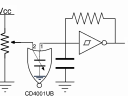
Summary
Demonstrating an unusual application of a CMOS NOR gate to implement a CMOS varactor controlled VCO, I explore the idea of circuit schematics as a music notation and how scholars and practitioners might create and analyze notations as part of the rich web of interactions that constitute current music practice.
A Synthesizable Hybrid VCO using SkyWater 130nm Standard-Cell Multiplexers
Sat, 03/06/2021 - 23:03 — AdrianFreed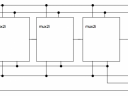
Summary
I introduce a new synthesizable VCO using (n+1) mux2i cells from the SkyWater130 PDK to form a (2n+1) hybrid ring oscillator.Routing the FingerPhone
Mon, 09/14/2020 - 12:35 — AdrianFreedIntro
I am studying how IC routing is done in large chips. I am following advice I often give people that it is helpful to learn how to do something by hand before using an automation tool. I was skeptical about this for chip routing because the scale of the problem these routers solve (trillions of gates) is outside what can be done by hand. As it turns out a few of the things I know about routing PCBs helped prepare me for learning some of the conceptual and strategic aspects of what these tools do.CMOS Inverter Oscillator
Wed, 05/08/2019 - 09:36 — AdrianFreed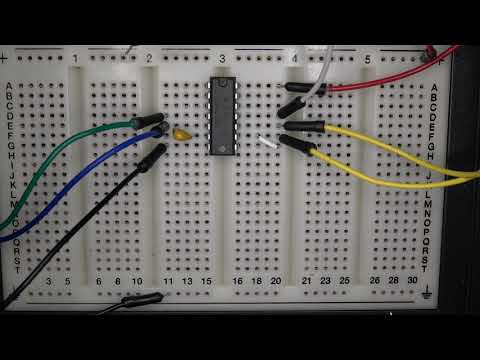
Analog and Digital Sound Synthesis as Relaxation Oscillators
Thu, 04/11/2019 - 17:40 — AdrianFreedThe following pages provide context for the workshop and include links to contributions from my co-teacher, Martin De Bie. This includes pointers to various iterations of his 555 timer-based Textilo project.
This project will be expanded ongoingly with further relaxation oscillator schemes.
555 Timer resources
Fri, 05/04/2018 - 16:35 — AdrianFreedHistory
There are few inaccurate histories of the 555 timer invention on the web so a good source is from the designer himself, e.g., http://semiconductormuseum.com/Transistors/LectureHall/Camenzind/Camenzi...He also wrote several interesting books. The history and detailed design considerations are covered in a book he kindly made available as a PDF file before his death in 2012: http://www.designinganalogchips.com/_count/designinganalogchips.pdf
Circuits
This is a reasonable compendium of interesting circuits using the IC: http://www.555-timer-circuits.comSome more:
http://www.nutsvolts.com/magazine/article/using-the-555-timer-ic-in-spec...
Radio Circuits
AM Receiverhttps://hackaday.com/2011/02/25/hear-that-its-a-555-timer-am-radio/
AM transmitter
http://www.circuitsgallery.com/2013/08/555-AM-transmitter-circuit.html
FM
http://streampowers.blogspot.com/2013/07/using-555-as-fm-transmitter-cir...
Audio Circuits
VCOHigh Performance VCO : http://www.electro-music.com/forum/topic-54623.html DRAWDIO
https://www.adafruit.com/product/124
ATARI PUNK CONSOLE http://www.synthrotek.com/products/lo-fi-synthesizer-circuits/atari-punk...
Variations
The CMOS versions of the 555 timer are interesting and lend themselves well to low voltage e-textile applications. My favorite variant is this one: https://www.jameco.com/z/CSS555-ID-Custom-Silicon-Solutions-CSS555-Micro...Here is the largest variant I know of: https://shop.evilmadscientist.com/productsmenu/tinykitlist/652-555kit
and the smallest (a 1mm x 1mm) package:
http://www.ti.com/product/LMC555/samplebuy https://www.mouser.com/Semiconductors/Integrated-Circuits-ICs/Clock-Time...
Circuit Layout Design Patterns for eTextiles Appliqués with Conductive Fabric
Sun, 04/22/2018 - 16:34 — AdrianFreedThis style is not convenient for eTextile Appliqués which are most commonly single-sided and are based on cut traces rather than etched boards.
There is an older style of PCB layout that is more suitable for low-speed e-textiles that I remember seeing with old transistor radios. The style is almost all copper with just a few lines etched away to separate conductors.
This makes designs more robust with multiple parts soldered on and removed and with multiple sewing points at the edges.
It also makes for less weeding and more surface area that will be fused/glued to the base fabric.

It was also common for many of the traces in these radios to be curved.
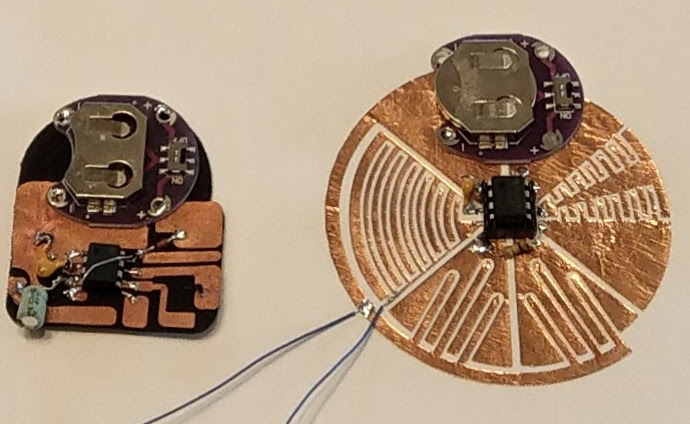
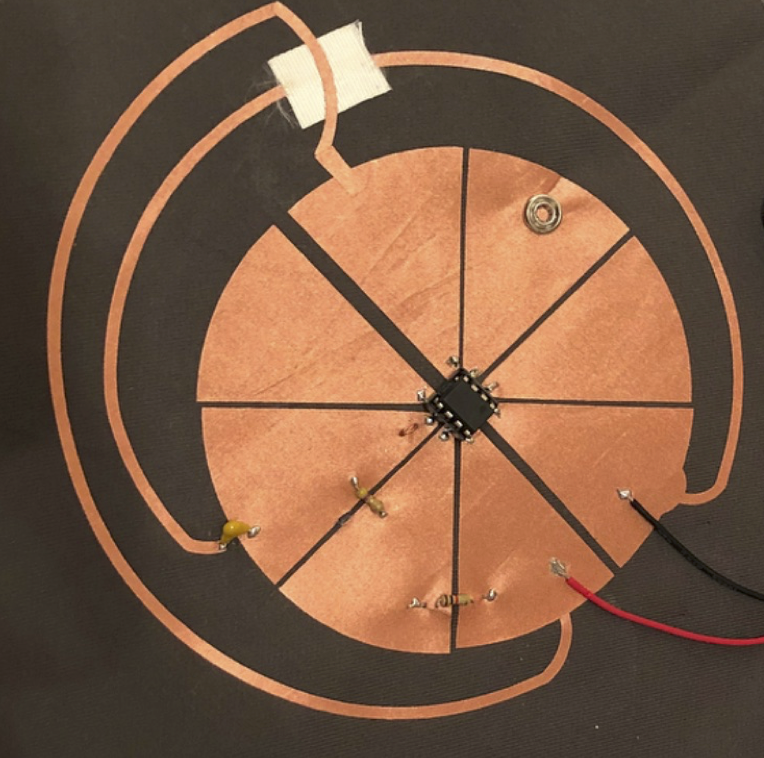
For the eTextile Spring Break I guided Martin De Bie through some iterations of his original Textilo design that includes this new thinking on layout and a further insight regarding the 8-pin DIP packages commonly used now by eTextile electronics experiments (with the ATTINY and 555 timer being common choices). This insight is to start the design from the DIP package and imagine the negative space of the smallest amount of conductive fabric that needs to be weeded to separate the 8 pins and combine the constraint of roughly equal area given to the conductors attached to each pin. This results in a motif with 8 radial lines and 8 triangles between them.
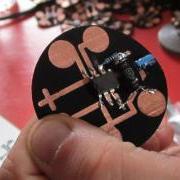
Here is the original textilo with its elegant pads to sew to:
Here is the next version with more conductive material to work with alongside the prototype of a radial design. The radial design includes serpentine interdigitation to allow for touch interaction:
Nicole Yi Messier picked up on this radial design pattern for her wearable 555 timer based FM radio transmitter:
Sound Making Technologies Ordered by Increasing Complexity/Cost/Size
Sun, 04/22/2018 - 15:36 — AdrianFreed| Approach | Example | Link |
|---|---|---|
| non-electronic | Lamello | http://bid.berkeley.edu/papers/chi/lamello_passive_acoustic_sensi/ |
| *Analog relaxation oscillator | Textilo | http://www.martindebie.com/research_project/textilo/ |
| Analog harmonic oscillator | self-resonating VCF | http://electronotes.netfirms.com/EN215.pdf |
| *Digital relaxation oscillator | Arduino Tone | https://github.com/adrianfreed/FastTouch |
| *Digital relaxation oscillator | Mozzi (LUT) | https://github.com/sensorium/Mozzi/blob/master/examples/01.Basics/Sinewa... |
| *Digital Modulation Synthesis | Mozzi (FM) | https://github.com/sensorium/Mozzi/tree/master/examples/06.Synthesis/FMs... |
| *Digital Subtractive Synthesis | Talkie (LPC Speech and singing) |
https://github.com/adrianfreed/Talkie |
| Unit Generator Library | Teensy Audio Library | https://www.pjrc.com/teensy/td_libs_Audio.html |
| Sampling "Synthesis" | Tone.js (Tone.Player) | https://tonejs.github.io |
| Dynamically Patched Unit Generators | Bela (libpd) | https://bela.io |
| Dynamically Patched Unit Generators with Image Synthesis |
Max/MSP/Jitter | https://cycling74.com/products/max |
| Analog Patched Modular | Modular | https://en.wikipedia.org/wiki/Modular_synthesizer |
A Self Organizing Classification System by BLW Chapman
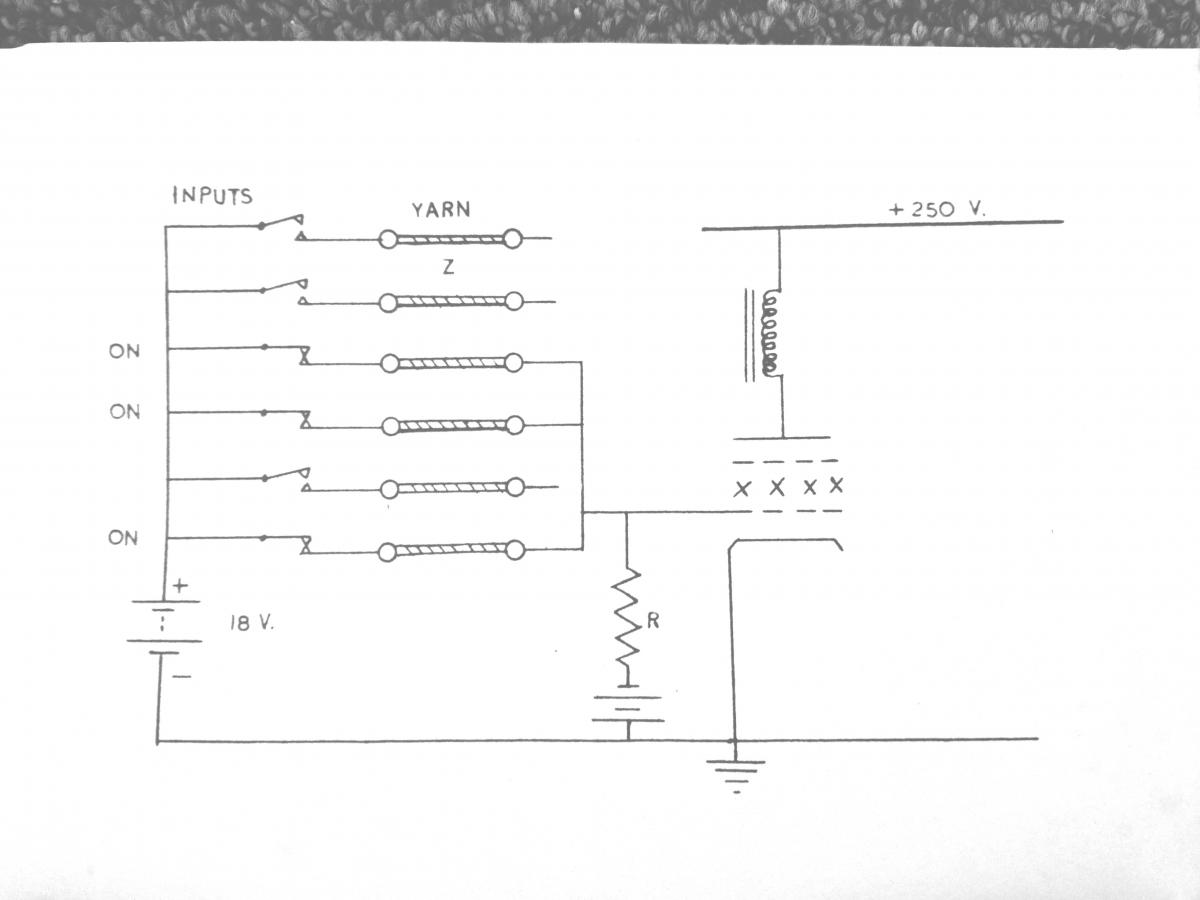
Mon, 04/16/2018 - 16:40 — AdrianFreed"I have recently completed building an electronic model of the 'growth net' principle and will now give a brief outline of its method of operation."
"What I described earlier as a common boundary now takes of the form of a moist fibre of cotton yarn connecting each input to the control grid of a pentode"
"The use of moist cotton fibre for storage has considerably reduced the size of the machine from the original plan which was to use condenser storage. By application of a hygroscopic agent such glycerin to the fibre the memory time of the machine can be controlled".
Textile 555 Oscillator ElectroSomatophone for circuit bending
Thu, 04/12/2018 - 16:39 — AdrianFreed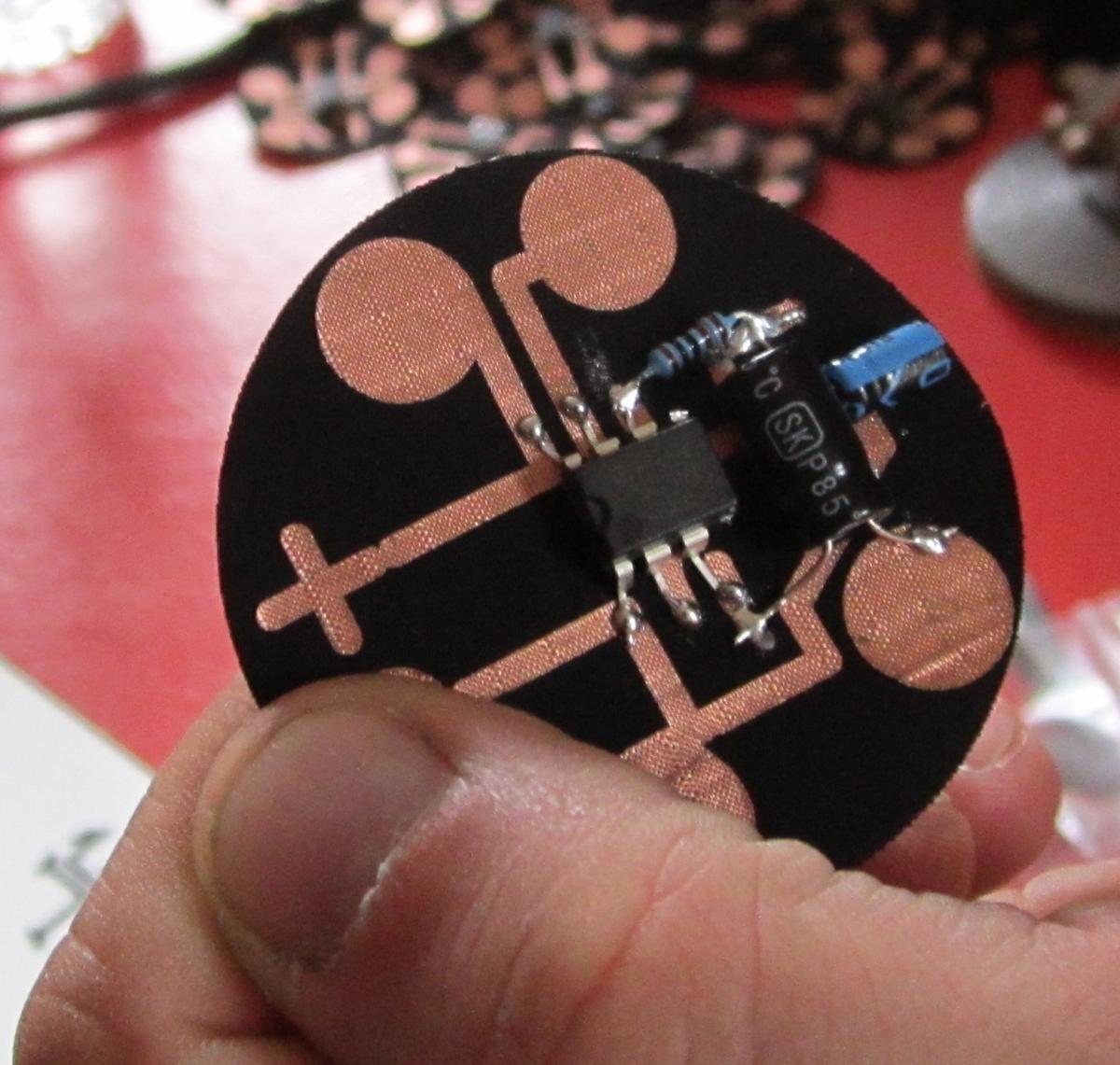
I tested this CMOS 555 breadboard version.
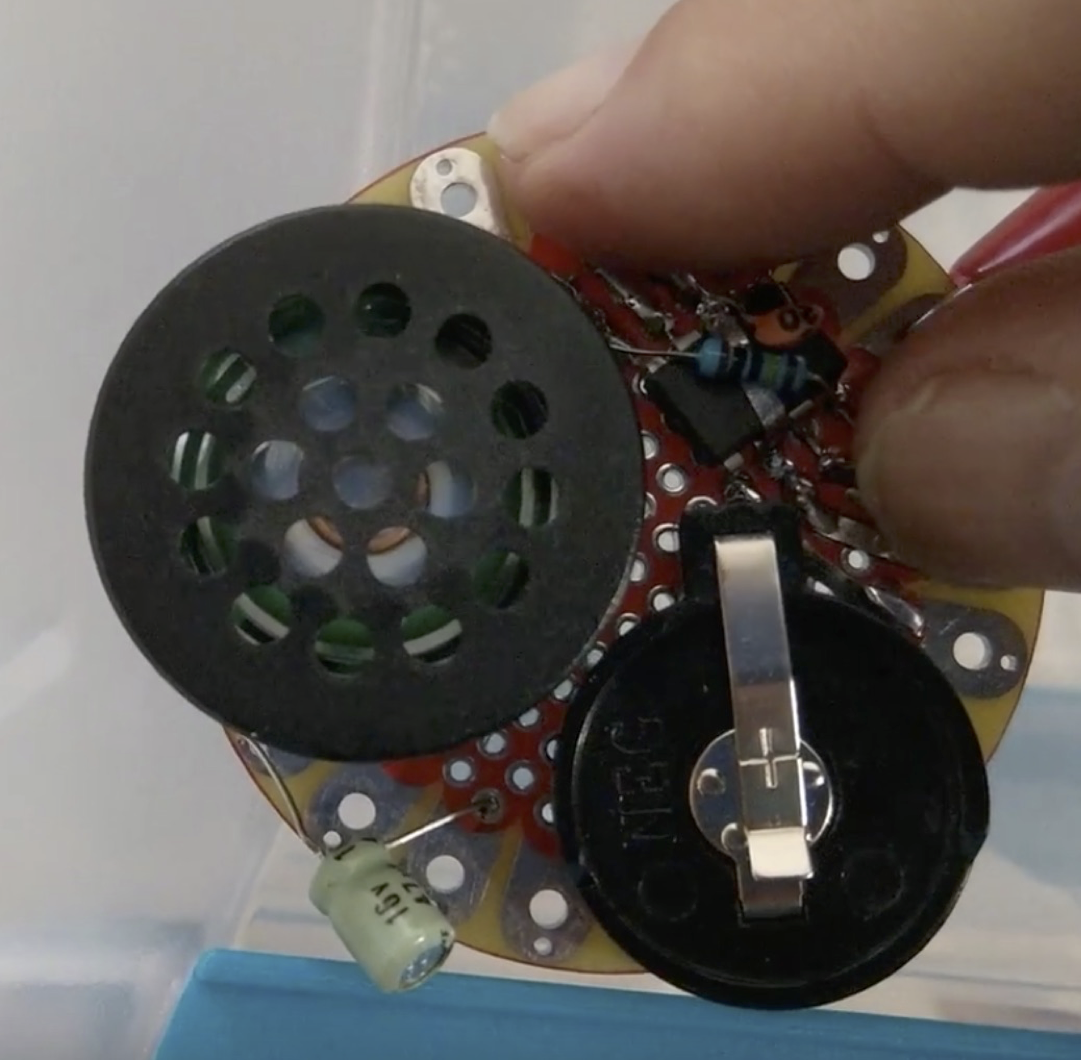
This informed suggested improvements to Textilo to Martin who came up with a textile layout which we used to teach during the audio workshop of e-textile Spring Break: http://youtube.com/HdMsk6c3WGw
Alex blogged a great student perspective of this workshop.
I also brought along some PCB's which can be sewed to or pressed on Lego baseboards.
To address the need for more interaction room for the fingers I suggested to Martin to look at a radiating octagonal design. He prototyped this at the camp in copper:
Nicole Messier also picked up on this design pattern and made a 555 oscillator based FM Radio transmitter:
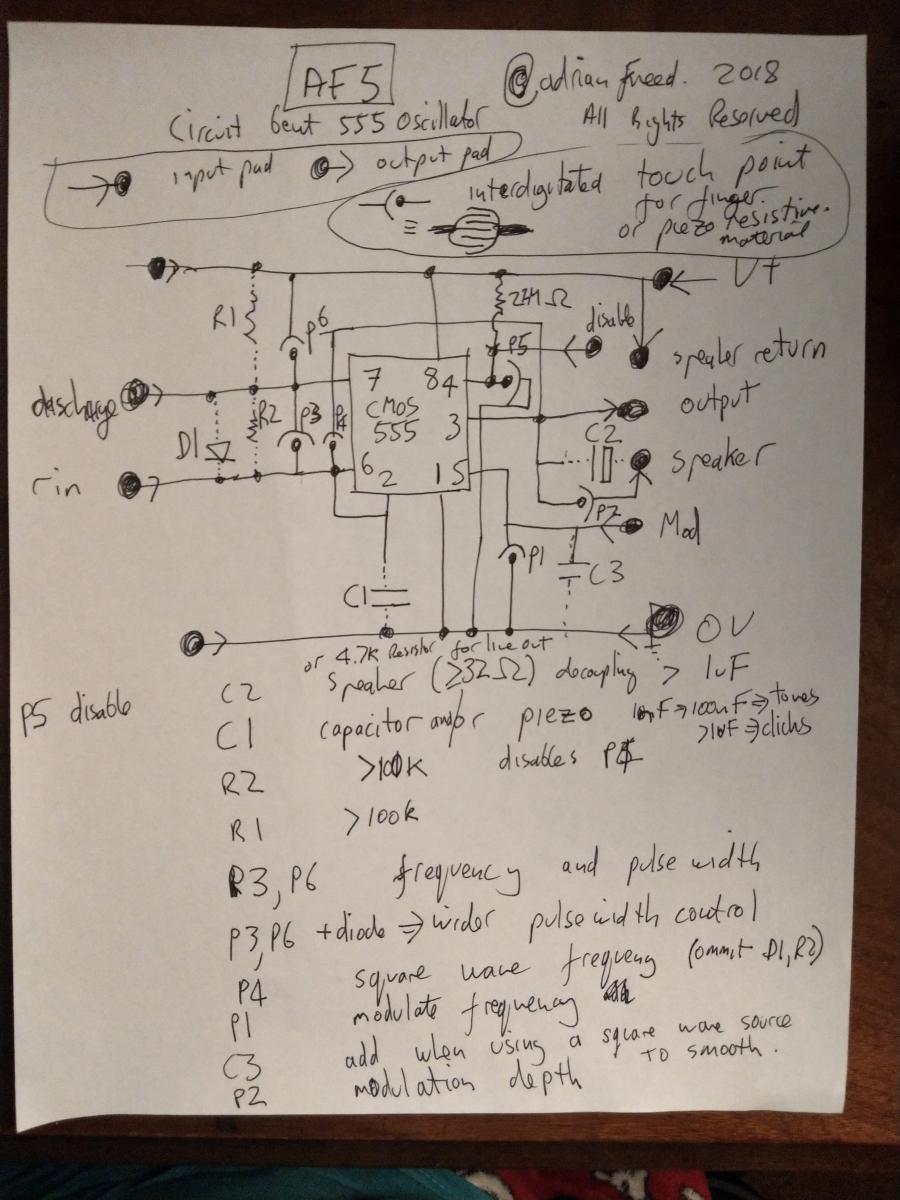
A walk through the schematic may be helpful.
Now what makes things productively confusing is the absence of resistors in the story. These are provided by your fingers or additional LDRs or piezoresistive fabrics. The layout is designed to give you room to put fingers in the useful places for the two popular ways of making the 555 timer oscillator. One way creates square waves. The other makes controllable pulse waves. I capture these possibilities on the following schematic which has a special notation for where you add variable resistance: