
I am a Senior Software Developer at Adobe Inc.
I was Research Director of UC Berkeley's Center for New Music and Audio Technologies (CNMAT)
Interactive Systems Research and Development: e-textiles, audio electronics, musical instruments, GUIs and UIMS, Open Sound Control (OSC), DAW.
Unfinished Business: The Elusive Guitar Synthesizer
Mon, 07/27/2020 - 17:50 — AdrianFreed
When I left for Paris after my undergraduate degree in Australia, I brought the
beginnings of a guitar synthesizer along to develop. My modest progress
at that time to the challenge was a hexaphonic optical pickup and the unfortunate
discovery that Phase Lock Loop (PLL) chips of the day would not reliably
track any slightly interesting guitar playing I could come up with.
Forty years later the situation is not much better.
Machine Learning and AI at CNMAT
Fri, 07/24/2020 - 15:27 — AdrianFreed
This is the first of a set of thematic overviews of CNMATs work I am writing that
cover the period since our inception to the closing
in 2017 of the research sector after David Wessel’s death. The activities themselves
are more completely understood with concurrent perspectives of many themes so this serialization
is more a reflection of the cursed sequentiality of language than any suggestion that a particular theme
might be more important than an other. Future themes may include Spatial Audio, Musical Programming Tools,
Musical control Structuring, Instrument Building, etc.
CMOS Inverter Oscillator
Wed, 05/08/2019 - 09:36 — AdrianFreed
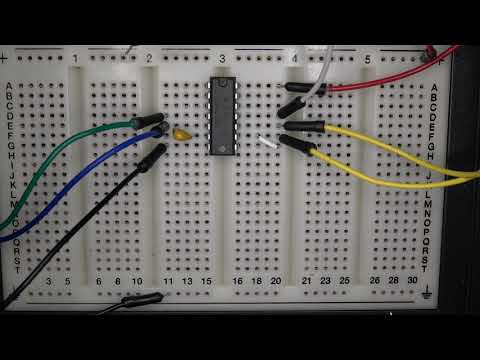
This alternative to the 555 timer for making audio oscillators is built from simpler building blocks (inverters) and has more versatility. You can find the schematics that correspond to the build video here:
https://www.youtube.com/watch?v=CzO_ZKMSnAU
I almost killed Bob Moog
Tue, 05/07/2019 - 10:10 — AdrianFreed
The 1989 International Computer Music Conference was a standout event in my career that almost turned into a disaster. My name was on three papers, CNMAT was beginning to function well, I met two of my childhood heroes there, Bob Moog and Wendy Carlos, and I was demonstrating an ambitious product in the trade show, the Reson8 DSP multiprocessor designed and built by myself and Marie-Dominique Baudot.
My best π day
Thu, 03/14/2019 - 11:20 — AdrianFreed
My best π day was in 1975 when I invented a new way to estimate π using elementary geometry and algebra. This wasn’t a particularly important result for the mathematical world because there were already so many ways to estimate π but it was one of those moments I can see now as watershed that strongly shaped the rest of my life.
Textile 555 Oscillator ElectroSomatophone for circuit bending
Thu, 04/12/2018 - 16:39 — AdrianFreed
When I saw Martin De Bie's Textilo e-textile 555 oscillator I wondered if it could be extended to allow for body interactions with the pads using CMOS 555 timers in the spirit of the CrackleBox.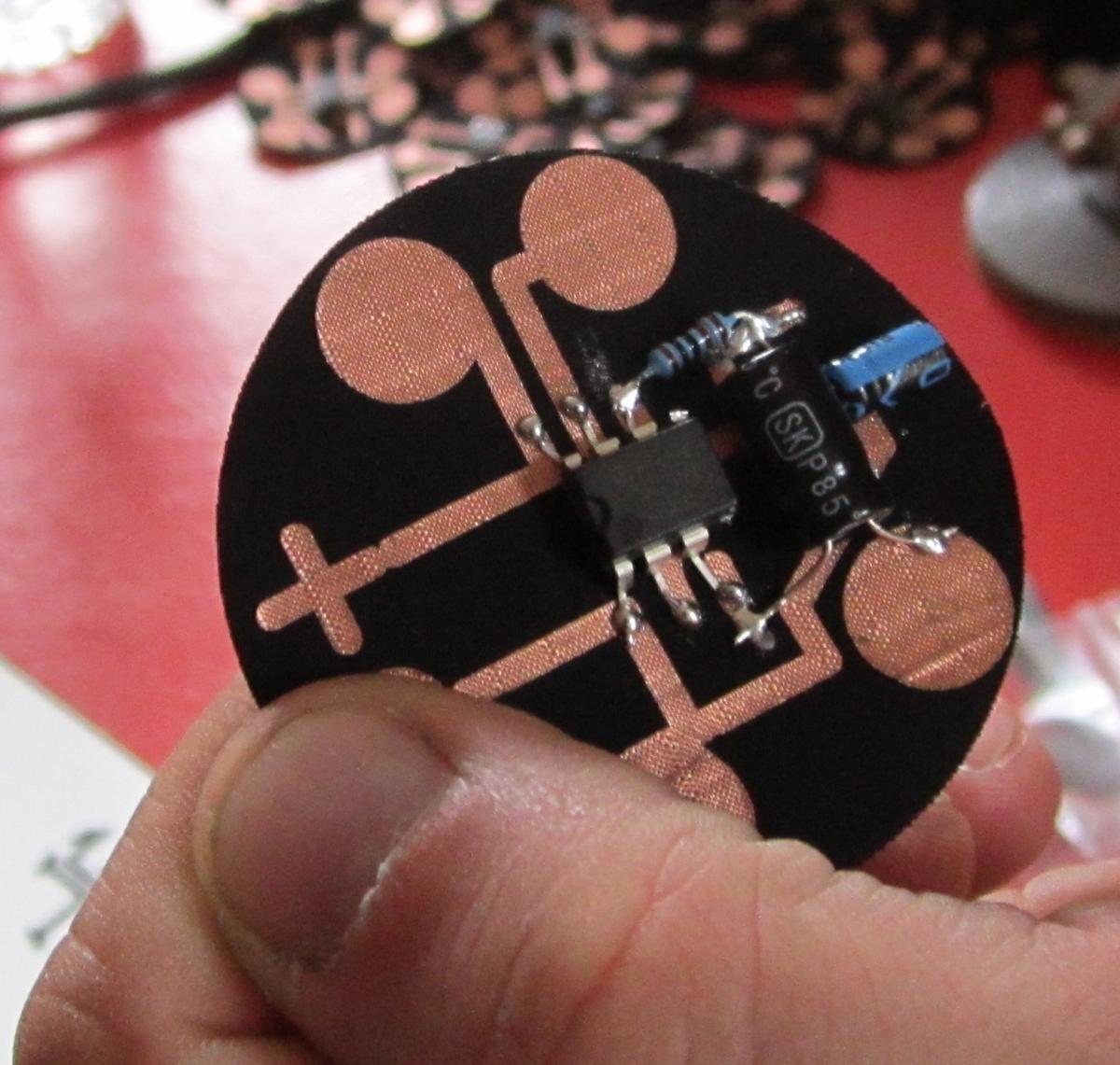
I tested this CMOS 555 breadboard version.
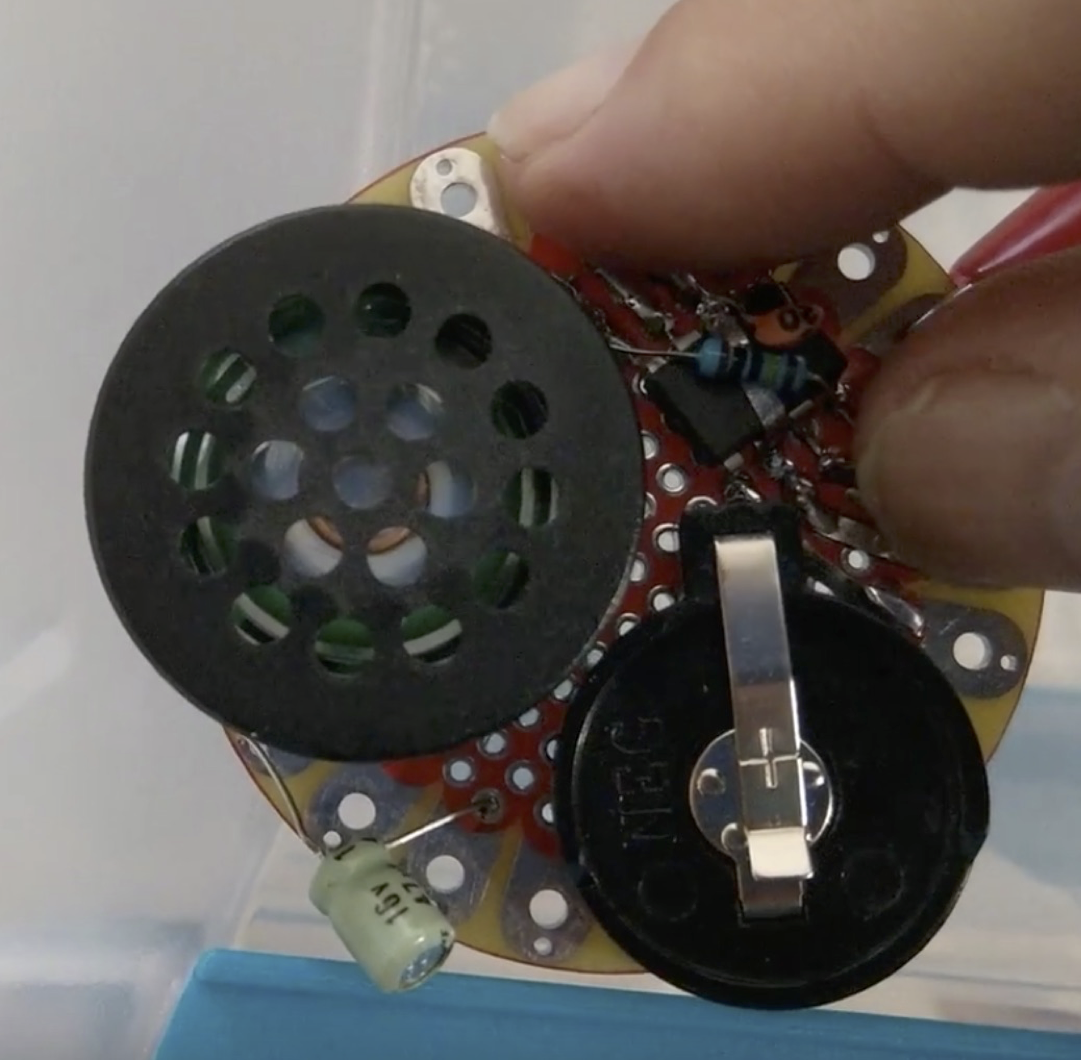
This informed suggested improvements to Textilo to Martin who came up with a textile layout which we used to teach during the audio workshop of e-textile Spring Break: https://www.youtube.com/watch?v=HdMsk6c3WGw
Alex blogged a great student perspective of this workshop.
I also brought along some PCB's which can be sewed to or pressed on Lego baseboards.
Where there is a Whug there is a Way: Triaxial e-textile Breadboard
Sun, 07/16/2017 - 01:16 — AdrianFreedDescription:
Rectangular grids are dominant forms in electronics and textiles. Triaxial grids have not been explored in e-textile work so this breadboard is offered to begin these explorations. Triaxial grids sample the plane with higher density and the availability of whug connections as well as warp and woof simplifies circuits by providing a natural power/ground/signal triple.

Conductive Paper Pressure Sensor and Arduino Teensy
Fri, 08/19/2011 - 20:27 — AdrianFreedOverhand knot in a strip of carbon-loaded paper becomes an FSR that can be easily connected to your favorite microcontroller (in this case a teensy running with the Arduino C++ tool chain).
This is part of my Fingerphone instrument.
Wearable Video Game Platform Bracelet
Mon, 06/21/2010 - 13:45 — AdrianFreed
This bracelet has an Arduino-powered ring of white LED's with a 3-axis accelerometer tilt sensor.
How many interactions/games can you think of with this platform?
There are 3 in the video:
Hand in the air: flashes (because at a party you want to signal that you want someone to talk to?).
Horizontal hand: always illuminates the top LED's whatever rotation your arm has ("smart flashlight")
Spins of the wrist: a blob spins around in the same direction and slows to a stop.
For a commercially produced inertial-sensing band keep an eye out on getymyo
OSCuino rough Arduino OSC sketch for Open Sound Control work
Thu, 01/21/2010 - 12:00 — AdrianFreed
This example uses the recommended OSC SLIP wrapping for OSC serial messages.
Attached is an example Max/MSP patch to display the OSC messages which
represent the pin states, temperature and power supply voltages. You may need slipOSC
from the CNMAT downloads page to unwrap the USB serial OSC.
This is a simple introduction to building OSC messages.
Yotam Mann built a complete library for Arduino that does the full OSC encoding
available on github CNMAT.
