Try a Ukulele: Your Guitar Chord Shapes in a New Key
Series: alt.ctrl activities; builds on Guitar and Ukulele
String players: try a related instrument of a different size. Your hands bring what they already know, and the instrument answers in its own register, reach and feel.
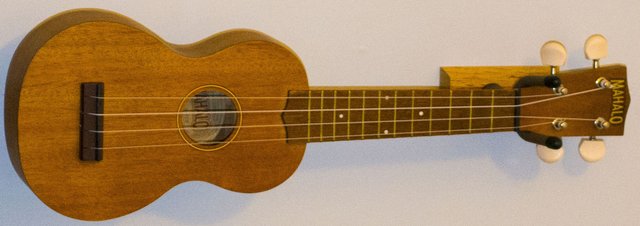
This activity is for guitarists, and the instrument is a ukulele. Borrow one from a friend, or buy one cheaply, for under $100. Its four strings are tuned like the four highest strings of the guitar, a fourth higher, so the chord shapes and melodic figures you know carry over to it.
Materials
| Item | Amazon | Lark in the Morning |
|---|---|---|
| A ukulele: borrow one from a friend, or buy one cheaply, for under $100 | Ukuleles | |
| Your guitar, and a capo, to compare the pitches (optional) |
| Item | Amazon | Lark in the Morning |
|---|---|---|
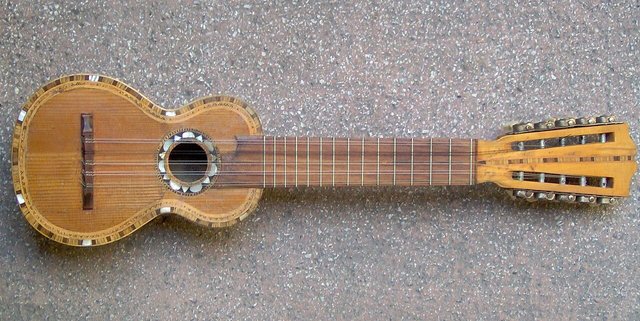
| A charango, from the Andes | STR269 | |
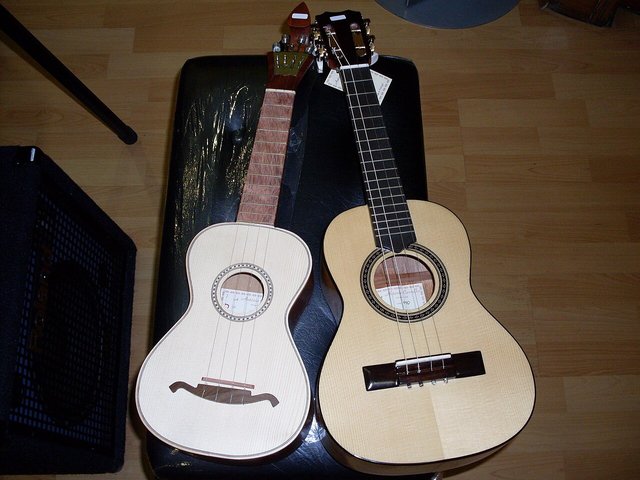
| A Portuguese cavaquinho | STR268 | |
| A Brazilian cavaquinho | STR267 | |
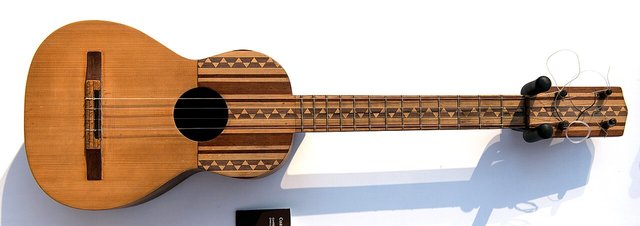
| A Venezuelan cuatro | ||
| A retail source for a Venezuelan cuatro: to be supplied. | ||
| A jarana jarocha, from Veracruz, Mexico: buy or borrow one from a local Son Jarocho group. Such groups are in many major cities and cultural centers around the world | ||
| A five-course baroque guitar: a modern one, its five pairs of strings tuned A, D, G, B, E, like the guitar's five highest strings | GBSR5C | |

Tools
- A tuner: a clip-on tuner or a tuner app
Skills
- Playing first-position guitar chords
- A few songs you know on the guitar
Instructions
- Tune the ukulele, from the string nearest your face: G, C, E, A.
- Notice that its pitches are in the same relation to each other as those of the guitar's four highest strings, D, G, B and E: a guitar with a capo on the fifth fret sounds the same pitches. (On most ukuleles the G string is tuned an octave higher than the capoed guitar's, the "high G" or re-entrant tuning; a "low G" ukulele matches it exactly.)
- Play the first-position guitar chord shapes you know, on the ukulele's four strings: D, D7, G, G7, C, C7. Notice that they sound in a different key: G, G7, C, C7, F, F7.
- Explore a familiar song using those chords.
- Add to your repertoire from other songs you know, by the same process: find their familiar chord shapes and melodic figures on the high strings of your guitar, and play them on the ukulele.
Variations
- A baritone ukulele is tuned D, G, B, E, like the four highest strings of the guitar: on it the chord shapes keep their names.
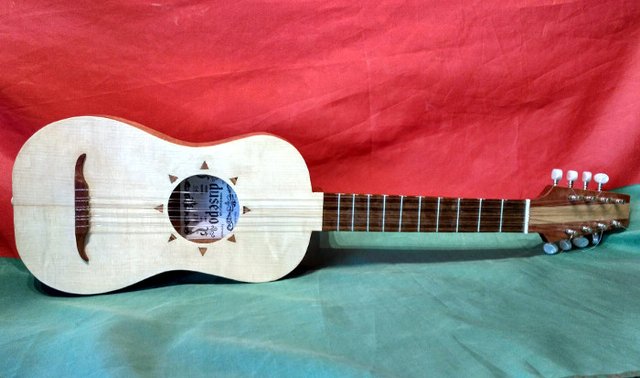
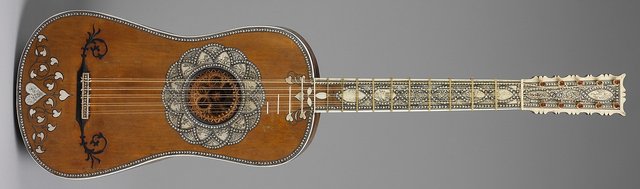
- Further explorations: the Hawaiian ukulele was originally a Portuguese instrument, developed in the 1880s from the machete, cavaquinho and rajão that Portuguese immigrants brought to Hawaii. Former Spanish and Portuguese colonies adapted European instruments of the Renaissance and Baroque, such as the vihuela, the guitar, the bandurria, the lute and the cavaquinho, in different ways: for example the Andean charango, the Brazilian cavaquinho, the Venezuelan cuatro and the Mexican jarana jarocha. The jarana, from southern Veracruz, descends from the five-course baroque guitar: it keeps five courses of strings, the middle three doubled, and is made in at least five sizes, from the chaquiste, smaller than a soprano ukulele, to the tercera, longer than a baritone ukulele. Its most popular tuning, "por cuatro", comes in several keys; in one, its five courses are G, C, E, A, G: the ukulele's G, C, E and A with a G added. Some jaranas are now made with four double courses tuned like a ukulele. The Wikipedia articles in Related resources tell their histories, some of which are still debated.





Related resources
- Ukulele (Wikipedia): its tunings, and its Portuguese forerunners, the machete, cavaquinho and rajão, brought to Hawaii by immigrants from Madeira, the Azores and Cape Verde
- Charango, Cavaquinho, Cuatro, Jarana jarocha, Vihuela and Baroque guitar (Wikipedia). The Spanish Wikipedia's Jarana jarocha gives its tunings, and its descent from the five-course baroque guitar, citing Antonio García de León, El mar de los deseos (2016)
- The Paper FingerPhone: a case study of Musical Instrument Redesign for Sustainability, NIME 2012, which counts the ukulele among the "transitional instruments that serve people on a journey as they acquire musical skills"
- "Teachers asking about good and bad are lost": grades vs learning, on teaching a polyrhythm, two against three, to guitar, ukulele and charango players
This activity by Adrian Freed is licensed under Creative Commons Attribution-NonCommercial-ShareAlike 4.0 International (CC BY-NC-SA 4.0): you may share and adapt it with attribution, for non-commercial purposes such as personal projects and teaching, and you must share adaptations under the same licence. Product names and links belong to their suppliers. The photos are not covered by this licence: each keeps the licence or public-domain status named in its caption.